Optimizing Production Lines with Harting Solutions and Smart Nameplates in Singapore

The optimization of production lines in the manufacturing landscape of Singapore does not solely present itself in the aspect of raw power and speed, but rather necessitates the smart aspects of electrical connectivity and effective labeling. Using both developed connection solutions and smart labelling systems, manufacturers will be able to reach a great level of reliability, traceability, and efficiency of maintenance.

This blog will discuss how such solutions can be used to optimize production lines in Singapore and utilize the support of a reliable supply channel like Harting Distributor in Malaysia.

The Importance of Reliable Connections

The assembly lines in modern manufacturing are based on advanced machinery, automated conveyor systems, and programmable logic controllers. All machines should have stable electrical and signal connections. Lack of good connections may cause downtimes, signal interference, and more maintenance cycles. Well-built connection systems will assure:

  • Consistent power delivery
  • Secure data transfer
  • Reduced downtime risk
  • Diagnosis is easier in the event of problems

Through wiring harness and connector design, manufacturers prevent inadvertent disconnections and signal drop, which cause throughput issues.

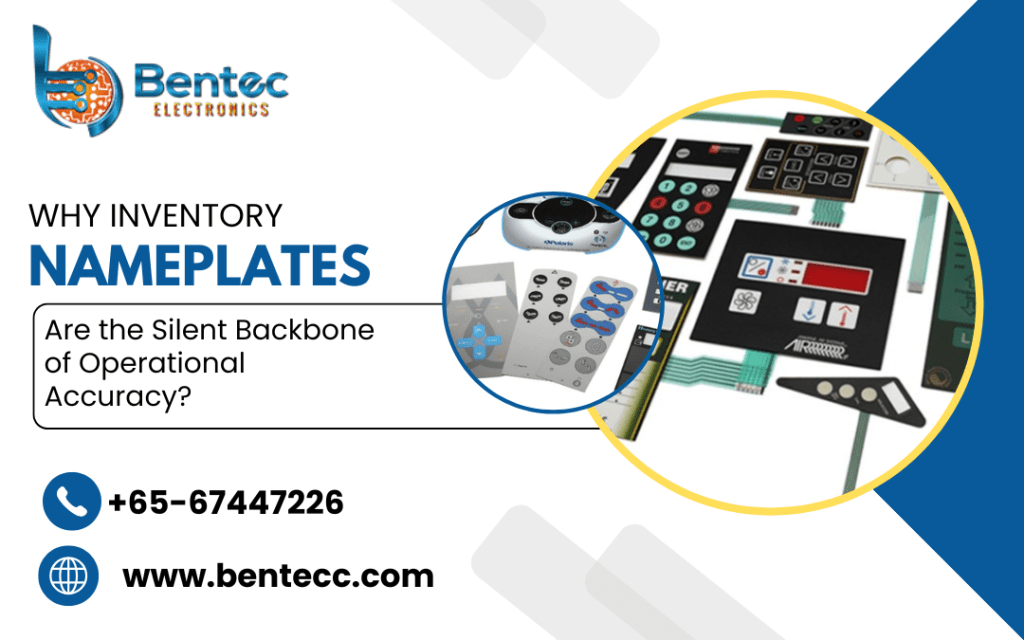
Smart Nameplates as the Backbone of Traceability

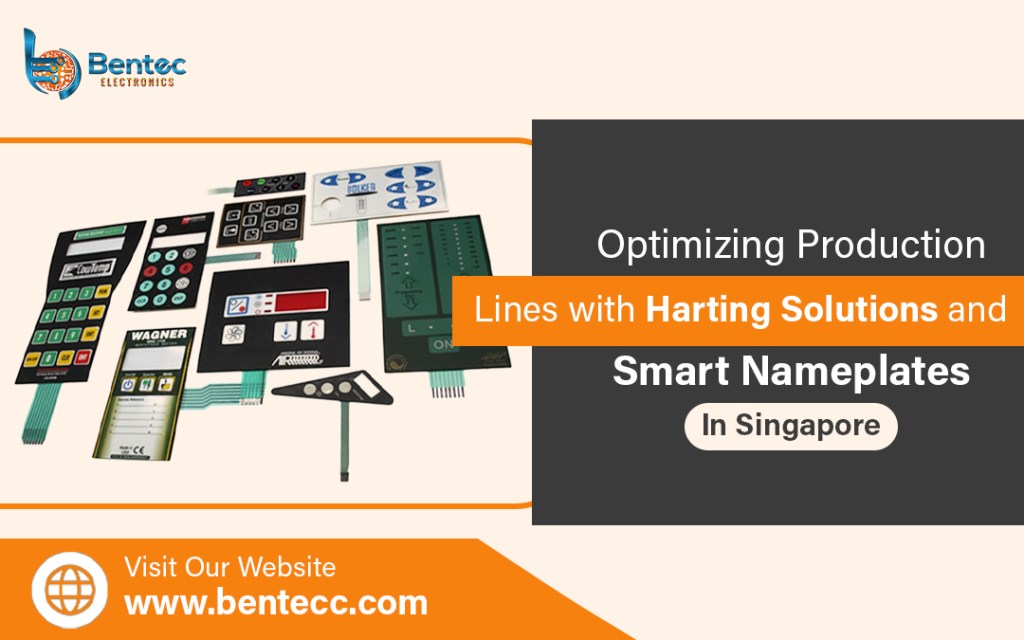
In addition to good wiring, marking of every component and cable is vital in maintenance, troubleshooting, and conformity. Durable, readable, and standardized Smart nameplates are used as identifying marks for all parts of the production line. This means that in cases where a technician has to inspect or replace a component, they can find the right cable or module easily without necessarily having to guess.

Smart nameplates deliver:

  • Components are clearly identified
  • Maintenance histories can be easily tracked
  • Less chance of errors in repairing or upgrading

Such a methodology will streamline and accelerate the walkthrough process, which will be less prone to error and more professional.

Key Features of Smart Nameplates

Smart Nameplates in Singapore that are appropriate to use in the industry environment usually provide:

  • Sturdy material construction – not easily affected by dust, water, and vibration.
  • Permanent engraving/marking – guarantees that the labels are legible through the years of operation.
  • Standardization of the document format – similar labelling throughout the line to facilitate easier record keeping.
  • Flexibility in location – has the capability to be adjusted to either cables, control panels, or equipment frames.

These name plates are necessary when machines are similar in parts or when cables are traveling through lengthy conveyor belts.

Implementation Strategy for Singapore Production Lines

In order to incorporate strong connectors and smart nameplates, a systematic way of doing this is:

  • Audit current installation – trace all machines, cables, and control modules.
  • Design connector layout – design group cables with logic, limit length, and plan routes to prevent interferences.
  • Labeling each part – use smart nameplates with a specific identifier related to a maintenance registry.
  • Record the setup – draw plans or spreadsheets between label names and machine components.
  • Teams in charge of maintenance – before commissioning, teams must be familiar with label codes and connector layouts.
  • Periodic monitoring and updating – in case of changes (e.g. added machine, changed cable), revise labels and documentation.

Such a systematic procedure minimizes the chances of failures, makes maintenance easier and troubleshooting faster.

In Conclusion

The challenge of optimization of production lines in Singapore requires a two-fold approach to strong connectivity and efficient identification systems. You may be rearranging existing lines or creating a whole new one, but modular connectivity paired up with nameplates designed and engineered correctly can revolutionize the way things are done, and your production will be smarter as well as more robust.

Why Smart Mobility Projects Rely on Both Custom Batteries and Specialized Wire Harnesses

The fast growth of smart mobility solutions has transformed the entire concept of transport. Whether it is electric vehicles (EVs), autonomous, or smart city infrastructure, all such technologies are changing the manner in which we live today. But it is all due to two crucial factors: custom batteries and professional wire harnesses.

These two factors are extremely important in making sure smart mobility projects run well, effectively, and safely. Find out with us why the two are essential in this regard.

The Importance of Custom Batteries to Smart Mobility

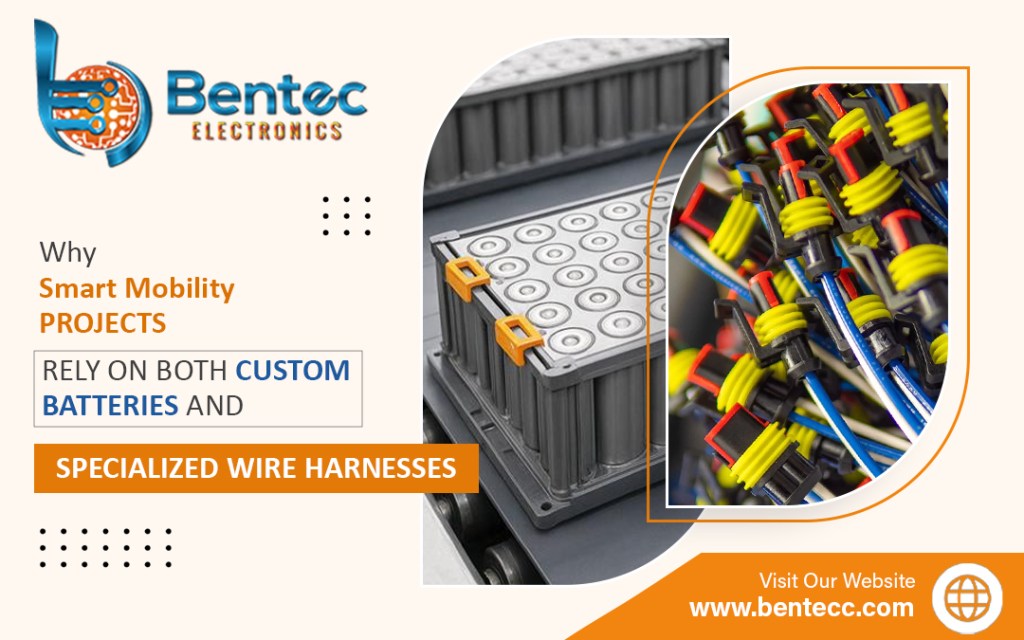
Custom battery Singapore solutions are specifically designed according to the unique energy demands of mobility equipment. Compared to off-the-shelf power supplies, a foreign or Singapore custom battery is designed to work within size limitations, weight ratio, and unique performance specifications.

This is important because intelligent mobility equipment differs significantly in power consumption, operating temperatures, and voltage needs. Some of the main benefits of custom batteries in this case include:

  • Maximum energy density: Provides extended run time and level operation.
  • Thermal management capabilities: Prevent overheating with intensive use.
  • Custom shape and weight: Optimal for spatially confined mobility uses.

Power solutions in smart mobility systems have to be efficient as well as resilient. A standard battery falls short in providing the particular discharge rates or lifespans necessary for use in actual operations. Because of this, engineers would often look towards a customized battery Singapore solution provider for these particularized energy needs, where system architecture compatibility and environmental factors are all ensured.

Wire Harnesses: The Unsung Heroes of Connectivity

In contrast to custom batteries, wire harnesses allow the transfer of signals and electricity throughout the vehicle. In smart mobility, with efficiency and miniaturization king, specialized wire harnesses take center stage.

The following is what makes a wire harness manufacturer indispensable in developing smart mobility:

  • Accuracy Engineering: Wire harnesses need to be manufactured to precise lengths, connectors, and tolerances so that there are no performance bottlenecks.
  • Durability and Flexibility: Harnesses need to withstand repeated vibration, environmental exposure, and movement, and need to be constructed and manufactured from tough material.
  • Efficient Routing: Specific harnesses provide efficient use of space, particularly in streamlined, compact intelligent mobility systems.

Wire harnesses also play a major role in bringing together sensors, controllers, and user interfaces—those technologies that make “smart” mobility possible. The selection of the proper wire harness manufacturer makes these assemblies frictionless and enduring.

The Synergistic Need for Both Components

Custom batteries and wire harnesses are complementary parts, not independent ones. The current and voltage provided by the battery must be totally compatible with the capacity of the wire harness. Incompatibility would lead to energy wastage, short circuits, or system failure.

Apart from that, smart components such as GPS, wireless, and AI-powered control systems rely on strong power as well as good data transmission cables—thus, coordination between wire harness engineers and special battery engineers is crucial.

In Conclusion

Future mobility is smart, electric, and networked. In order for this to become a reality, system designers must spend on special-purpose batteries and high-performance wire harnesses. These pieces of equipment, which are usually ignored by end-users, have a direct influence on the efficiency, security, and lifespan of mobility devices.

Whether sourcing a custom battery or a reputable wire harness manufacturing company, precision, compatibility, and reliability have to be the paramount concern in all cases. Only then can smart mobility solutions live up to their dreams of smart, sustainable transport.

Wire Harness Manufacturers and the Future of Electric Vehicles in Singapore

The future of electric cars (EVs) is changing the nature of the automobile industry across the globe. As countries like Singapore move towards a cleaner future, there has never been a greater need for EVs. At the center of all this transformation is the contribution of wire harness manufacturers, who are tasked with producing the complex systems that charge and link the different parts of EVs.

In this blog, we will discuss the significance of wire harnesses in the electric vehicle industry and how businesses are future-proofing electric vehicles in Singapore.

The Crucial Role of Wire Harnesses in Electric Vehicles

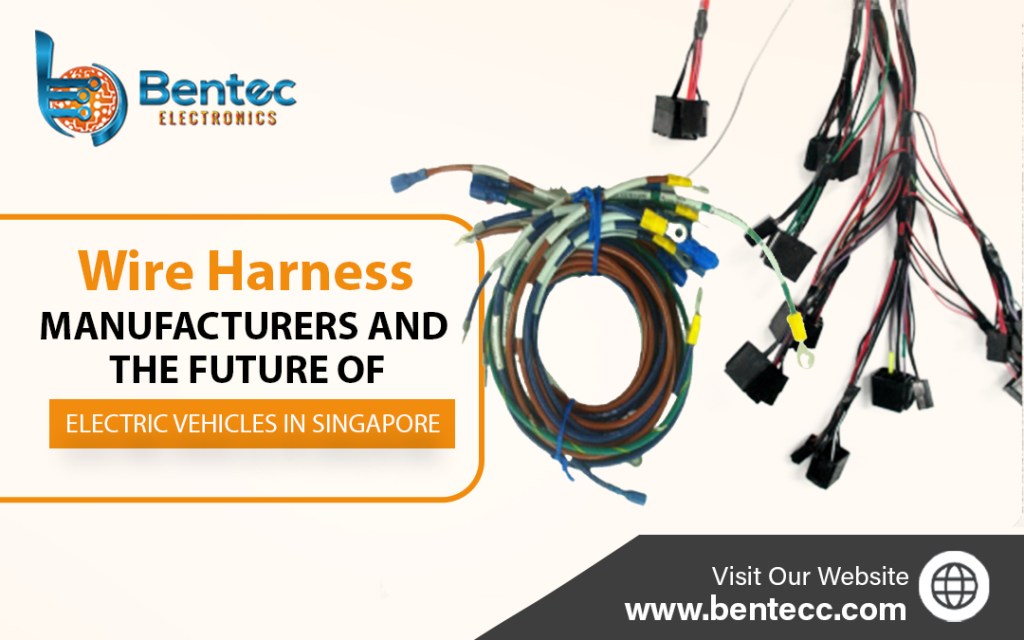
Wire harnesses provide a channel through which electric devices like motors, sensors, batteries, and charging systems communicate effectively to facilitate the proper operation of the whole electric vehicle.

Wire harnesses have the duty of carrying out a number of important duties in EVs:

  • Power Supply: EVs need to have proper power distribution to different components of the vehicle, from the electric motor itself to the onboard charger. Wire harnesses provide power correctly through such systems.
  • Signal Conveyance: EVs today have lots of sensors, cameras, and control units that need to talk to one another in unison. Wire harnesses transfer the signals between the units.
  • Reliability and Safety: Due to the high voltage and risk of hazards from EVs, wire harnesses are made to be durable, fire-resistant, and safe so that they can withstand extreme conditions and remain in working condition for some time.

The Need for Wire Harness Manufacturers in Singapore

With Singapore moving forward in electric mobility aggressively, the need for high-quality wire harnesses is also on the rise. Singapore’s vision of curtailing carbon emissions and encouraging environmentally friendly technologies has been fueling an uprising in the sale of EVs.

The following are the primary drivers propelling the demand for the best wire harness manufacturer in Singapore:

Government Incentives

The Singaporean government has launched a number of incentives and policies for the development of electric vehicles in an effort to encourage the increase of electric vehicles, such as grants for EV adoption and EV charging infrastructure subsidies.

Technological Advancements

With the EV technology advancing at a fast rate, wire harness manufacturers are required to follow evolving design needs in order to enable wire harnesses with increased voltage support and improved power distribution systems.

The Wire Harness Manufacturer’s Role in the Future

With the Singapore EV industry still expanding, the suppliers of wire harnesses will also play an important role in further development of the potential of electric vehicles. Some of the ways through which they will influence the future of the industry are the following:

  • New EV Solutions: The suppliers of wire harnesses will be requested to develop novel solutions that will directly respond to the needs of EVs, including high-speed electric motors, as well as efficient energy storage solutions.
  • Sustainability: They care about the green materials and manufacturing processes that are environmentally friendly, as it is a global trend to produce cars more sustainably.
  • Installation of Smart Techs: In autonomous driving, wire harnesses should be prepared to deliver the communication systems that will precondition the use of AI-driven technology to make it work perfectly.

In Conclusion

The Electric vehicle in Singapore has a great future because the country can be considered a leader in terms of adopting green technology and innovation. Finally, wire harness manufacturers and other major suppliers, like a Harting distributor in Singapore, will lead the next round of electric vehicle development, as they will add to the sustainability and technological capability of the industry.

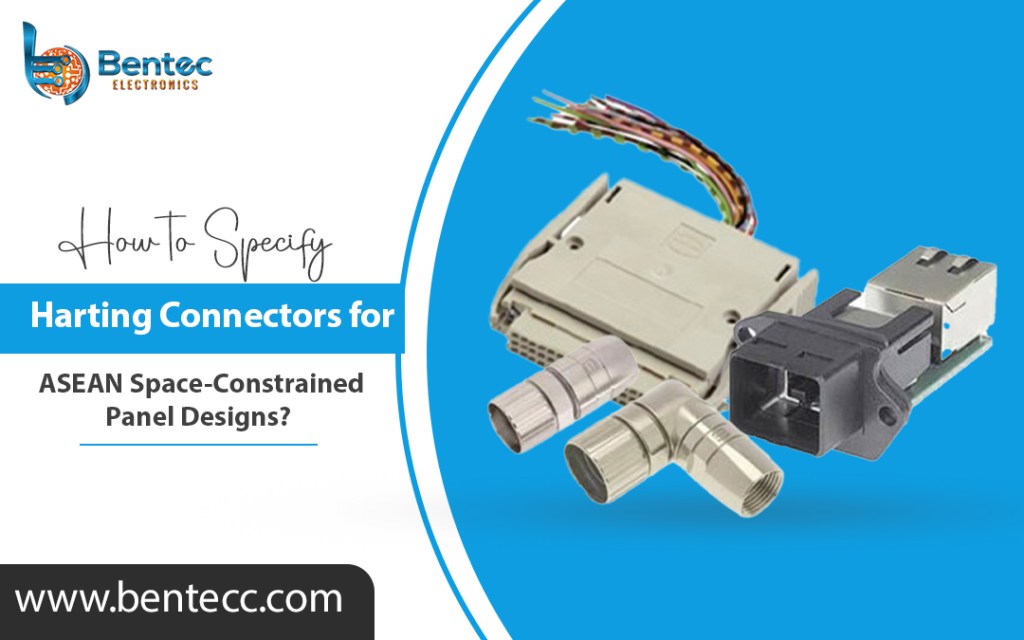
How to Specify Harting Connectors for ASEAN Space-Constrained Panel Designs?

Due to the rapidly growing industrial base of ASEAN, panel design engineers are facing a greater challenge to provide space-saving, efficient, and robust electrical systems. The connector is among the most important components of such assemblies, and Harting connectors are among the first considerations because they are space-saving, modular, and reliable.

But choosing the appropriate Harting connector for space-constrained panel designs—particularly in Malaysia and Singapore—is a considerate task. The following is a step-by-step method to help engineers and procurement specialists choose the best Harting solution.

Understanding the Needs of Space-Constrained Panels

Designers in ASEAN countries, especially in cities and more densely populated manufacturing settings, are usually confronted with the difficulty of fitting high-function modules in dense areas. This is particularly challenging while combining modules such as industrial PCs, servo drives, or even bespoke battery packs in Malaysia.

Harting connectors, due to their industrial duty being heavy for applications, are available in various form factors and modular configurations that can be developed for insertion into these spatial constraints. Specifying with a reliable Harting distributor in Singapore or locally ensures stocking availability and technical assistance, which is critical at the point of specification.

Key Considerations When Specifying Harting Connectors

To select the perfect Harting connector for your panel design, refer to the following crucial parameters:

  1. Form Factor & Mounting Style – Select compact-sized, rectangular-shaped connectors with right-angle mounting in case of a limited vertical space. Panel mount or PCB mount also needs to be considered based on your design.
  1. Number of Contacts & Signal Types – Make sure the chosen connector can support the number of power, signal, or data lines needed. Modular Harting systems allow all three to be combined in one compact package.
  1. Current & Voltage Ratings – Always match connector ratings to system power requirements. Over-estimation may cause overheating or failure, particularly in high-current use, like with special battery systems in Malaysia.
  1. Ingress Protection (IP) Ratings – Panel exposed to dust, moisture, or vibration must carry connectors of appropriate IP ratings, especially in the outdoor or industrial context of the ASEAN marketplace.
  1. Lightweight installability and maintainability – The tool-free or fast-attach connectors reduce the time spent working and provide a high level of modularity in the future.

Advantages of Modular Harting Connectors in Space-Constrained Panel Designs

  • Pin configuration tailored to a specific application
  • Mixed-signal, power, and data in a single interface
  • Less requirement for multiple points of contact
  • Greater design freedom without a greater footprint
  • Strong and compact for demanding industrial uses

These are the traits that are highly beneficial to engineers using custom battery solutions in Malaysia, where thermal management and current density are key to design.

Tips on How to Deal with Harting Distributors in Singapore

When ordering connectors, having a good Harting distributor in Singapore can possibly make your procurement and design process seamless. Below are tips to remember:

  • Request Technical Consultation: Leverage distributor know-how earlier on to validate your design.
  • Check Regional Stock Levels: ASEAN stock levels may affect lead times.
  • Go for Certifications & Compliance Data: Particularly for export-focused assemblies or compliance-driven markets.

Collaborating with a distributor early in the process ensures all components will be compatible, and it leads to greater system-level certification harmonization.

The Bottom Line

In panel designs with small spaces in the ASEAN market, accurate specification of connectors is not just an option but a necessity. It does not matter whether you are implementing a new-generation automation system or installing a custom battery in Malaysia. As far as sourcing and support go, an effective Harting distributor in Singapore is what can make or break seamless deployment and ultimate success.

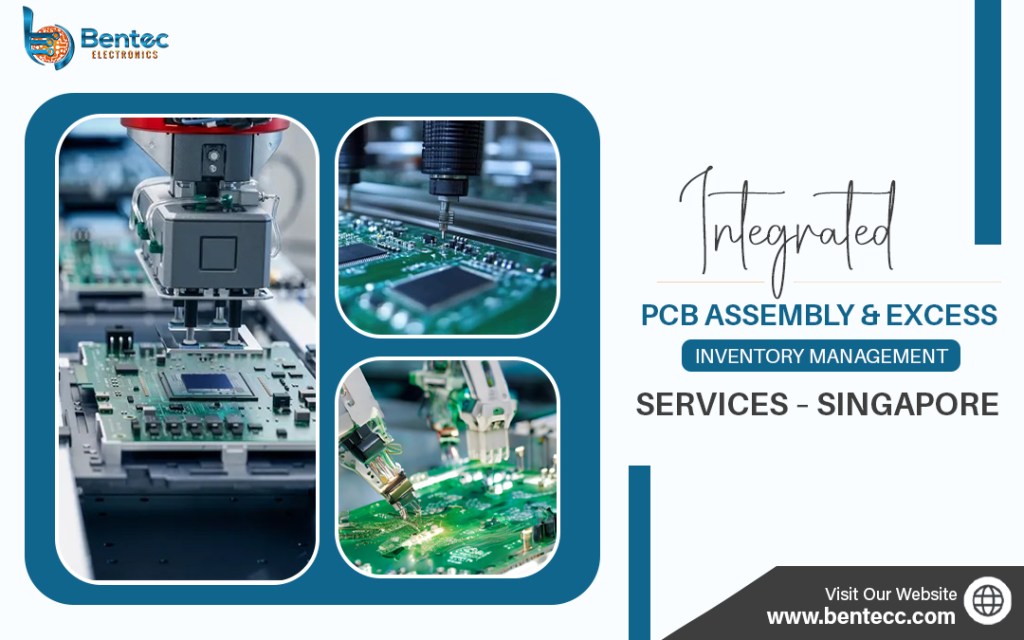
Integrated PCB Assembly & Excess Inventory Management Services – Singapore

It’s common for costs to be high when working with a contract maker for small production runs. This is especially true when it comes to making gadgets. Because the cost of making printed circuit boards (PCBs) is going up, switching to bulk PCB assembly is a good idea. When the number of items is thousands or more, automation, cost savings, and efficient production start to make a difference.

From Prototype to Mass Production

Prototype builds, which are usually limited to tens or hundreds of units, are the first step in PCB development. These early models are used to make sure that the design and operation of the board are correct. The build output goes up a lot once it is certified and accepted for production. Planning the whole production run at once based on study into the market and predictions of what people will want saves money and makes the assembly line work better. 

Faster Turnaround and Delivery

Getting the goods to customers on time is very important for the success of any launch. Since enough parts were bought ahead of time, there is no delay caused by not having enough materials or having to replace them. When you order in bulk, you can keep extra stock on hand in case any parts fail or test results are lost. Automation, made possible by large orders, cuts down on assembly time and speeds up project finish. 

Customization Opportunities in Volume Orders

Larger production numbers give designers more freedom to make changes and try new designs. When the amount of the build supports the setup cost, contract makers can more easily make changes like adding new parts, resizing the board, or using different casings. When you purchase a lot of something instead of a little bit, you may make tiny adjustments to the design to better meet consumer input and market demands.

Strengthening the Supply Chain

A more reliable and fast supply chain benefits from buying parts in bulk. When a customer places a big order, the vendor is more likely to put that customer first and help them, maybe even making special parts when needed. This makes PCB Assembly Singapore processes run more smoothly and improves the efficiency of planning.  

Supporting Scalability and Demand Readiness

Scalable production methods are needed to meet the needs of customers whose needs are growing. Successful bulk assembly makes multi-part tasks predictable and manageable. Ready-to-ship inventory lets companies quickly satisfy massive orders, which makes customers happy.

Managing Component Availability and Stability

 In the technology business, part obsolescence is a common problem. Effective Excess Inventory Management stabilizes costs over time in addition to reducing material waste. If you combine it with accurate forecasts, it guarantees that output will continue even when the market changes.

Inventory Preparedness for On-Demand Delivery

Having enough stock on hand helps with faster response times and more open delivery times. Buying in bulk makes Excess Inventory Management better by cutting down on the number of reorders and making better use of resources. It also helps reach green goals by cutting down on the need for packing and shipping, which in turn lowers the production process’s impact on the environment.

Conclusion

When a product is ready to go from pilot to full-scale production, bulk PCB assembly is a big help. Bulk output is a key part of growth, scalability, and long-term success in businesses that use PCB Assembly Singapore services and change quickly. Discover precision, performance, and reliability with Bentec Electronics – your trusted partner in innovative electronic solutions.

The Importance of Custom Batteries and Harting Technology in Business

In today’s competitive corporate world, power and communication must work in tandem. Harting technology enables custom battery Malaysia to deliver power and information precisely when and where they are needed. So, they work together to create modern enterprises that are more innovative, resilient, and enduring.

How Modern Harting Technology Affects Different Fields

Harting technology is a part of industrial connection because it makes sturdy connections. They are essential for automation lines and data centers, and they are usually bought from a trusted Harting distributor Singapore. This also enables the safe and uninterrupted transmission of power, data, and signals, even under the most challenging conditions.

  • Harting connections made today can handle high voltage and current ratings, even in small applications.
  • Their design allows you to combine different jobs, including power, signal, and data, into a single link.
  • They can withstand water, dust, vibrations, and temperature fluctuations. This makes them ideal for use in various industries and outdoor settings.
  • Quick assembly and easy-to-use features reduce the time and cost of construction and maintenance.
  • Modern connections enable Industry 4.0 infrastructures to send and receive critical data.

Uses of Harting Technology

Harting connectors and interface solutions play a significant role in high-performance applications that need tight, strong, and fast connections. These are things that a reputable Harting distributor in Singapore may provide you. You can use them in various ways to improve and extend the lifespan of things.

  • Send robots power and messages so they can do their jobs without too much trouble.
  • Trains, subways, and trams all require solid electrical connections. These parts must function properly even when the system is vibrating or operating at high temperatures.
  • Solar panels and wind turbines can be use to transfer electricity safely and stably.

Packaging and food processing machines make it simple to detach and reconnect for cleaning and maintenance. This way, the system can continue to function without needing to be shut down.

The Role of Custom Batteries in Business

Custom battery systems are becoming increasingly critical as the world becomes more automated, portable, and reliant on renewable energy. They are also the finest way to store and distribute energy for use. These batteries also help a lot of things work better and last longer by mixing various chemicals, shapes, and management systems:

  • Individually custom packs have unique design to fulfill specific requirements for power, current, and runtime.
  • Hosted heat controls and battery management systems (BMS) reduce hazards and extend battery life.
  • Made to fit in places that aren’t typical in medical gadgets, robotics, and drones.
  • New materials increase energy density while lowering mass.
  • Some firms use environmentally friendly chemicals when producing customized units for recycling.

When to Use Custom Batteries

The flexibility of Custom battery Malaysia is a strength. They have the ability to work in a variety of fields. These batteries serve a wide variety of applications, from places that need a lot of energy to tiny gadgets, with better accuracy and dependability.

  • Used in pocket monitors, drip pumps, and other devices that need a small amount of electricity all the time.
  • Ensure a solid backup is in place in case the power goes out in a remote area.
  • Cameras and motion detectors that operate off the grid require electricity that can last for an extended period.
  • Used drones and GPS-guided tools to do farming chores and keep an eye on things in real-time.

Harting technology and custom battery solutions are transforming how businesses operate. They are incredibly adaptable and can be easily connected to multiple power sources. They help firms operate more effectively, safely, and flexibly in a market that is constantly evolving.

How Efficient Is Your Warehouse? The Need for Smarter Excess Inventory Management

In today’s fast-moving industrial environment, warehouse efficiency isn’t merely an efficiency measure—it’s a requirement for business survival. The escalating demand for smart industrial components, like those by a Harting distributor in Singapore, has put a greater burden on warehouses to work with precision.

Yet, one of the neglected challenges that upset this accuracy is excess inventory. Inefficient handling of surplus stock can lead to increased costs, wasted storage space, and, eventually, reduced operational performance.

Understanding the Hidden Costs of Excess Inventory

Overstock is more than unused inventory—it’s immobilized capital, added storage expenses, and higher obsolescence risk. When warehouses are full of unsold or sluggish merchandise, room to store fast-moving inventory decreases. In addition, stock mismanagement can produce inaccurate forecasts and procurement errors, exacerbating the issue in the long run.

Most common problems related to overstock:

  • Higher storage and maintenance expenses
  • Lower cash flow
  • Increased risk of product expiration or obsolescence
  • Wasteful use of warehouse capacity
  • Supply chain agility disruption

Specialized supplier-influenced warehouses, like a Harting distributor in Singapore, should be extra vigilant since component life cycles can be brief, and specs can evolve swiftly.

Why Smarter Inventory Management is Important

Successful excess inventory management is not merely about minimizing excess—it’s about developing a lean and responsive system that enables agility and precision. With the help of smarter strategies, companies can turn warehousing into a profit-generating unit instead of a cost center.

Smarter Excess Inventory Management Strategies:

1. Data-Driven Forecasting

Use forecasting systems that review past trends and forecast future demand with a high level of accuracy. Involving real-time sales and supply data in your inventory choices is the key to avoiding overstock.

2. Regular Inventory Audits

Schedule regular checks and stock assessments in order to detect slow-moving stock before it turns into dead stock. A cycle count system usually beats periodic annual counts in terms of maintaining accuracy.

3. Demand Segmentation

Classify inventory according to the variability of demand. This aids in fitting inventory strategy to various product classes and market behavior, maximizing order quantities.

4. Automated Replenishment Systems

Automation reduces errors caused by humans and assists in maintaining optimum levels of stock. Automated systems also issue notifications whenever there are mismatches or threshold crossing.

5. Liquidation and Redistribution

Anticipatively sell out old stock or shift it from one branch to another where there could be more demand. This not only opens up space but also minimizes the write-off burden.

Making the Transition: From Overstock to Optimization

Shifting to intelligent inventory practices does not mean an overhaul—it starts with incremental, regular improvements. Adopting just one of the above strategies can result in quantifiable gains. For example, companies involved in technical component supply chains—like those handling a Harting distributor in Singapore—can gain significantly from intelligent demand planning and rigorous inventory classification.

A contemporary warehouse needs to advance beyond being merely a passive repository. It needs to be an adaptive, responsive node in the supply chain. Effective excess inventory management is key to this progression.

In Summary

Excess inventory is a silent drain on warehouse productivity and profitability. By adopting data-driven, segmented, and automated strategies, businesses can achieve leaner operations and better serve their markets. Whether you’re handling consumer goods or partnering with a Harting distributor in Singapore, refining your approach to excess inventory management is critical for long-term success.

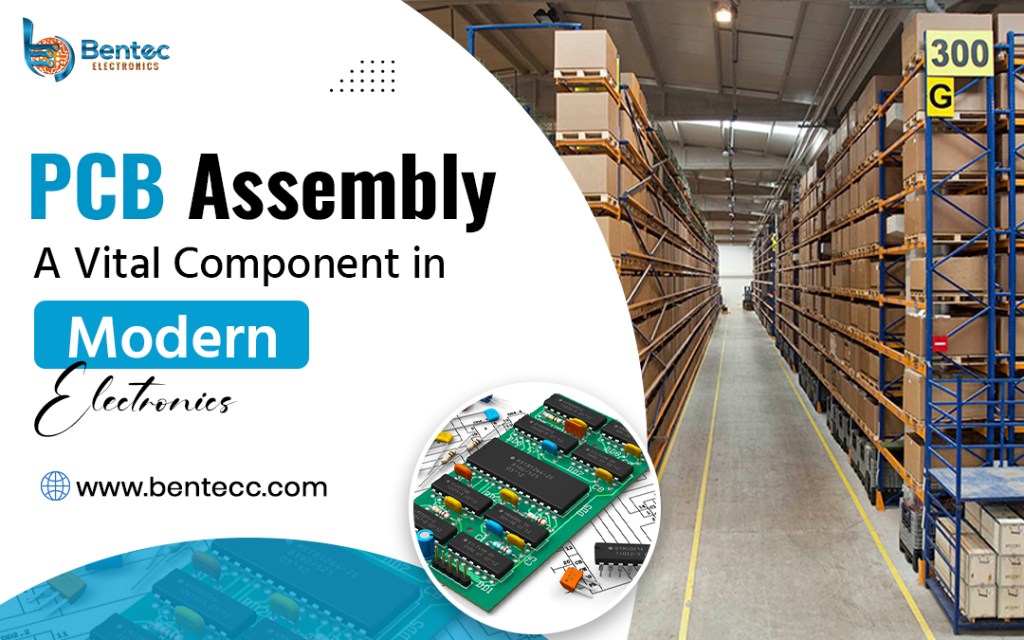
PCB Assembly: A Vital Component in Modern Electronics

Electronic items require Printed Circuit Board (PCB) assembly to link all the pieces and make them operate together. PCB Assembly Singapore has become more complicated as technology advances and customers demand more miniature, efficient goods. Putting together the parts, soldering, trying, and inspecting the finished product are all steps in this process that ensure reliability.

Understanding the PCB Assembly Process

The board is an integral part of PCB Assembly Singapore. A thin, flat surface holds and connects different parts electrically. Putting something together usually starts with designing the PCB and then getting all the needed parts. Once the parts are ready, the process of putting them together can be broken down into several steps:

Solder Paste Application

Solder paste is applied to PCB pads for part attachment. This paste contains microscopic solder balls that melt and electrically connect pieces to the board during soldering.

Component Placement

Machines precisely install resistors, capacitors, and microchips on PCBs. The placement must be precise for reliability and usefulness.

Soldering

After soldering, the pieces are securely bonded to the PCB.  Depending on the PCB’s type and complexity, wave, reflow, and hand soldering might be used.

Inspection and Testing

After joining the parts, the PCB is scrutinised for faulty solder joints or misplaced parts. X-ray and automated optical inspection (AOI) is standard. Function testing verifies the PCB works appropriately in the final product.

Final Assembly and Packaging

After passing tests, the PCB is assembled into a smartphone, medical device, or automotive electronics. The packaging protects the item throughout shipping and use.

The Role of a Harting Distributor in PCB Assembly

Harting is notable for industrial connectivity and connector technology. Its products are vital in PCB assembly and other fields. Harting connectors, cables, and other products enable dependable electrical connections and fast signal transfer in PCB assemblies.

Technology and manufacturing firms that need Harting parts work with Harting Distributor Singapore. They give you access to Harting’s full line of goods, which includes reliable modular connector systems, high-quality connectors for harsh industrial settings, and network solutions for communication systems.

Why Choose a Harting Distributor for PCB Assembly Needs?

Quality and Reliability

Harting products are durable and trustworthy. They withstand extreme temperatures, dampness, and mechanical stress. They are ideal for PCB assemblies in manufacturing, telecommunications, and vehicles.

Wide Product Range

A Harting Distributor Singapore offers many different types of interconnection solutions, from standard connectors to unique solutions. This allows companies to pick the best parts for their PCB assembly needs.

Technical Expertise

Most of the time, people who sell Harting goods are very knowledgeable in their field. They can give you expert information on which products will work best for your project and help you with the technical parts of adding these parts to your PCB assembly.

Timely Delivery and Support A trustworthy Harting Distributor Singapore will ensure your order arrives on time so your PCB assembly process doesn’t get held up. They also offer support and troubleshooting after the sale to ensure that your goods work well after they’re put together.

The Future of PCB Assembly and Interconnection Technology

The process of putting together PCBs changes along with technology. Because of trends like smaller sizes, more components, and more complicated designs, more people need solid connectors and interconnection solutions. Harting’s new ideas in fast data transfer, strong connectors, and flexible interconnection systems are helping makers deal with these problems and meet the growing needs of the electronics market.

Conclusion

PCB Assembly Singapore is integral to electronics production, requiring skill, accuracy, and the right parts. Working with a reliable Harting distributor will give you access to high-quality interconnection options that will help you make dependable, efficient, and long-lasting electronic products. These relationships will become even more critical as technology improves so that we can keep up with the needs of modern electronics.

Boost Efficiency & Cut Waste: Master PCB Assembly & Inventory Management

Electronics require PCB Assembly, which entails adding pieces to a PCB to create circuits. However, managing excess inventory well is just as essential if you want to cut costs and make supply chain processes run more smoothly. This article will discuss how businesses can streamline PCB Assembly and use good excess inventory management strategies to reduce waste and make more money.

1. Electronics Manufacturing: PCB Assembly Matters

PCB Assembly is the basis of modern electronics, making it possible to create high-performance products for many fields.  Assembling PCBs correctly is essential for all electronic devices, from household electronics to industrial automation.  Parts of the process are:

  • Component Positioning: You can use automated tools or hand to put electronic parts on the PCB.
  • The Soldering Process: For strong electrical links, use methods like wave soldering or reflow soldering.
  • Inspecting quality: Automated Optical Inspection (AOI) and X-ray inspection are advanced testing methods that find problems early on.

Optimising PCB Assembly Singapore ensures that electronic goods are reliable, save money, and get to market faster.

2. PCB Manufacturer Inventory Issues

Companies have too much inventory when they keep more parts than they need, which wastes time and money.  This problem happens because of wrong predictions of demand, problems in the supply chain, and production delays.  Some common issues are:

  • Higher Holding Costs: Costs like storage, insurance, and wear and tear increase over time.
  • Component Demise: Because technology changes so quickly, some parts become useless, which costs money.
  • Cash flow constraint: Too much inventory wastes money that could be used in other parts of the business.

3. Effective excess inventory management

To effectively handle extra inventory, companies should use innovative inventory strategies.  Here are some essential approaches:

  • Accurate Demand Forecasting: Data analytics and AI-powered tools can help you figure out what customers will want so you don’t overstock.
  • Vendor-Managed Inventory VMI: Controlling inventory levels with providers is the best way to ensure a balanced supply.
  • JIT manufacturing: When you only order parts when needed, you save money on storage and waste.

4. Technology in PCB Assembly and Inventory Control

New technologies are essential for improving both PCB Assembly Singapore and excess inventory management.  Here are some new ideas:

  • Automatic Assembly Lines: Artificial intelligence (AI) and robotic arms make tools more accurate and faster.
  • IoT Inventory Tracking: Keeping track of product levels in real time stops both overstocking and shortages.
  • Blockchain for Supply Chain Transparency: Inventory management is more accurate when deals are safe and transparent.

5. Ecological Methodologies to Reduce PCB Contamination

Sustainability is becoming a significant issue in PCB manufacturing, with companies finding ways to reduce electronic waste.  Effective methods include:

  • Recycling Excess Components: Reusing and recycling outdated parts can cut costs and support environmental efforts.
  • Eco-Friendly PCB Materials: Using lead-free solder and biodegradable PCB substrates supports sustainability.
  • Reduced Waste Design: Making PCBs with efficient design cuts down on waste.

6. PCB Assembly and Inventory Management Future Trends

The future of PCB Assembly Singapore and Excess Inventory Management will depend on how technology changes and what the market wants.  Here are some new trends:

  • AI-Powered Predictive Analytics: AI-powered tools will make predicting demand easier and make the best use of supplies.
  • Wearable PCBs: Products will look very different after new developments in bendable electronics.
  • Sustainable Manufacturing: Policies and programs that support the environment will push eco-friendly output.

Conclusion

A well-tuned PCB Assembly method and intelligent management of excess inventory can lower costs, boost efficiency, and ensure long-term manufacturing practices.  Businesses can make the most money and reduce waste using advanced technologies, accurate demand forecasts and ecofriendly initiatives. Bentecc is changing the way PCBs are put together with smart solutions for excess inventory that will make the future more efficient, cost-effective, and environmentally friendly.

From Connectivity to Power: Harting Distributors and Custom Batteries as Key Industry Players

Companies in industries that involve connectivity and power solutions depend on specific elements that can provide the needed support. Two important components involved in this system are ‘Harting connectors’ and ‘Custom battery solutions’ which are used in many applications. 

In Singapore and Malaysia specifically, these components are inherent in manufacturing, automation, transport and telecommunication industries.

The Role of a Harting Distributor in Singapore

1. Industrial-Grade Connectivity Solutions

A Harting distributor in Singapore provides quality connectors for data, power and signal conveying in industrial applications. Thus, these connectors are used in the following:

  • Automation Systems: Facilitating uninterrupted data exchange in smart factories.
  • Railway and Transportation: Enhancing power and communication reliability in transport networks.
  • Energy Sector: Supporting secure electrical connections in renewable energy installations.

2. Enhancing Efficiency and Reliability

Applications in industries in Singapore need cables that are resistant to conditions such as fluctuating temperatures, humidity and vibrations. There are several components that a Harting distributor in Singapore offers in the following ways:

  • They should avoid the loss of signal and power interruptions.
  • Maintain low value for money through quality and durability of the connections.
  • These should be offered in a modular fashion to easily fit into various applications.

3. Advanced Technologies in Connectivity

The complexity of the modern industries’ requirements calls for more sophisticated connector technologies and their further automation and digitalization. These distributors provide:

  • High-speed data connectors for seamless machine-to-machine communication.
  • An example of hybrid connectors is those that combine power, signal and data in one single interface.
  • Solutions depending on a particular field of business and its needs.

Importance of Custom Battery Solutions in Malaysia

1. Compliance with Power Demands by Specific Industries

Power solutions need to meet particular requirements of the standards of the industries and their demands for performance and safety. In a manner of speaking, a custom battery in Malaysia is meant to:

  • Fit the required specifications in voltage, capacity, and form factor.
  • Enhance efficiency for specific business needs in certain industries.
  • All this needs to be achieved for the constant and sustainable provision of electricity.

2. Variations for Applications

The Malaysian custom battery caters to all sectors, especially the following areas:

  • Medical Equipments: These are used with consistent energy backup for life-critical applications
  • Renewable Energy Systems: Power storage for sustainable operation in renewable energy system
  • Aerospace and Defence: High-density energy for the mission-critical devices

3. Advanced Technologies in Batteries

Advanced Battery Technologies include all the battery chemistries, management systems to be included into the customised batter solutions are as follows:

  • High-energy efficiency with lithium-ion and lithium-polymer batteries
  • Real-time monitoring with smart BMS for safety purposes
  • Fast-charging capability could be utilized for the realization of a few improvement objectives regarding the operational efficiency.

The Bottom Line: Increasing Demand For Integrated Solutions

With increased sophistication in industrial processes, connectivity solutions and also custom battery systems are changing to fit the new requirements. To complement this, businesses can ascertain quality connectivity and power solutions by dealing with trusted distributors, achieving optimum performance, reliability and creativity in their operations.