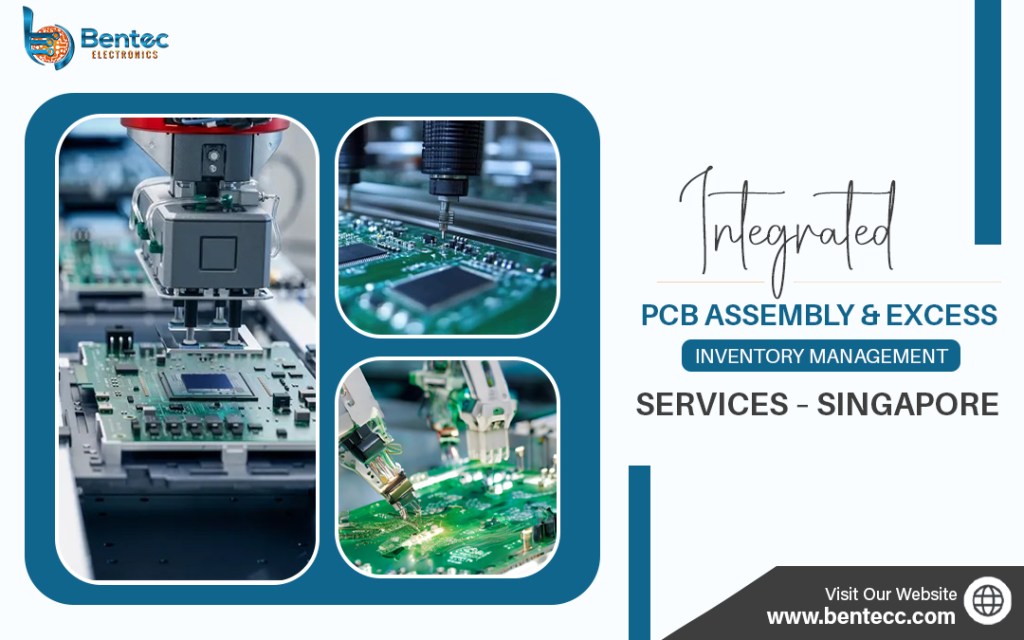
Integrated PCB Assembly & Excess Inventory Management Services – Singapore

It’s common for costs to be high when working with a contract maker for small production runs. This is especially true when it comes to making gadgets. Because the cost of making printed circuit boards (PCBs) is going up, switching to bulk PCB assembly is a good idea. When the number of items is thousands or more, automation, cost savings, and efficient production start to make a difference.

From Prototype to Mass Production

Prototype builds, which are usually limited to tens or hundreds of units, are the first step in PCB development. These early models are used to make sure that the design and operation of the board are correct. The build output goes up a lot once it is certified and accepted for production. Planning the whole production run at once based on study into the market and predictions of what people will want saves money and makes the assembly line work better. 

Faster Turnaround and Delivery

Getting the goods to customers on time is very important for the success of any launch. Since enough parts were bought ahead of time, there is no delay caused by not having enough materials or having to replace them. When you order in bulk, you can keep extra stock on hand in case any parts fail or test results are lost. Automation, made possible by large orders, cuts down on assembly time and speeds up project finish. 

Customization Opportunities in Volume Orders

Larger production numbers give designers more freedom to make changes and try new designs. When the amount of the build supports the setup cost, contract makers can more easily make changes like adding new parts, resizing the board, or using different casings. When you purchase a lot of something instead of a little bit, you may make tiny adjustments to the design to better meet consumer input and market demands.

Strengthening the Supply Chain

A more reliable and fast supply chain benefits from buying parts in bulk. When a customer places a big order, the vendor is more likely to put that customer first and help them, maybe even making special parts when needed. This makes PCB Assembly Singapore processes run more smoothly and improves the efficiency of planning.  

Supporting Scalability and Demand Readiness

Scalable production methods are needed to meet the needs of customers whose needs are growing. Successful bulk assembly makes multi-part tasks predictable and manageable. Ready-to-ship inventory lets companies quickly satisfy massive orders, which makes customers happy.

Managing Component Availability and Stability

 In the technology business, part obsolescence is a common problem. Effective Excess Inventory Management stabilizes costs over time in addition to reducing material waste. If you combine it with accurate forecasts, it guarantees that output will continue even when the market changes.

Inventory Preparedness for On-Demand Delivery

Having enough stock on hand helps with faster response times and more open delivery times. Buying in bulk makes Excess Inventory Management better by cutting down on the number of reorders and making better use of resources. It also helps reach green goals by cutting down on the need for packing and shipping, which in turn lowers the production process’s impact on the environment.

Conclusion

When a product is ready to go from pilot to full-scale production, bulk PCB assembly is a big help. Bulk output is a key part of growth, scalability, and long-term success in businesses that use PCB Assembly Singapore services and change quickly. Discover precision, performance, and reliability with Bentec Electronics – your trusted partner in innovative electronic solutions.

How Efficient Is Your Warehouse? The Need for Smarter Excess Inventory Management

In today’s fast-moving industrial environment, warehouse efficiency isn’t merely an efficiency measure—it’s a requirement for business survival. The escalating demand for smart industrial components, like those by a Harting distributor in Singapore, has put a greater burden on warehouses to work with precision.

Yet, one of the neglected challenges that upset this accuracy is excess inventory. Inefficient handling of surplus stock can lead to increased costs, wasted storage space, and, eventually, reduced operational performance.

Understanding the Hidden Costs of Excess Inventory

Overstock is more than unused inventory—it’s immobilized capital, added storage expenses, and higher obsolescence risk. When warehouses are full of unsold or sluggish merchandise, room to store fast-moving inventory decreases. In addition, stock mismanagement can produce inaccurate forecasts and procurement errors, exacerbating the issue in the long run.

Most common problems related to overstock:

  • Higher storage and maintenance expenses
  • Lower cash flow
  • Increased risk of product expiration or obsolescence
  • Wasteful use of warehouse capacity
  • Supply chain agility disruption

Specialized supplier-influenced warehouses, like a Harting distributor in Singapore, should be extra vigilant since component life cycles can be brief, and specs can evolve swiftly.

Why Smarter Inventory Management is Important

Successful excess inventory management is not merely about minimizing excess—it’s about developing a lean and responsive system that enables agility and precision. With the help of smarter strategies, companies can turn warehousing into a profit-generating unit instead of a cost center.

Smarter Excess Inventory Management Strategies:

1. Data-Driven Forecasting

Use forecasting systems that review past trends and forecast future demand with a high level of accuracy. Involving real-time sales and supply data in your inventory choices is the key to avoiding overstock.

2. Regular Inventory Audits

Schedule regular checks and stock assessments in order to detect slow-moving stock before it turns into dead stock. A cycle count system usually beats periodic annual counts in terms of maintaining accuracy.

3. Demand Segmentation

Classify inventory according to the variability of demand. This aids in fitting inventory strategy to various product classes and market behavior, maximizing order quantities.

4. Automated Replenishment Systems

Automation reduces errors caused by humans and assists in maintaining optimum levels of stock. Automated systems also issue notifications whenever there are mismatches or threshold crossing.

5. Liquidation and Redistribution

Anticipatively sell out old stock or shift it from one branch to another where there could be more demand. This not only opens up space but also minimizes the write-off burden.

Making the Transition: From Overstock to Optimization

Shifting to intelligent inventory practices does not mean an overhaul—it starts with incremental, regular improvements. Adopting just one of the above strategies can result in quantifiable gains. For example, companies involved in technical component supply chains—like those handling a Harting distributor in Singapore—can gain significantly from intelligent demand planning and rigorous inventory classification.

A contemporary warehouse needs to advance beyond being merely a passive repository. It needs to be an adaptive, responsive node in the supply chain. Effective excess inventory management is key to this progression.

In Summary

Excess inventory is a silent drain on warehouse productivity and profitability. By adopting data-driven, segmented, and automated strategies, businesses can achieve leaner operations and better serve their markets. Whether you’re handling consumer goods or partnering with a Harting distributor in Singapore, refining your approach to excess inventory management is critical for long-term success.