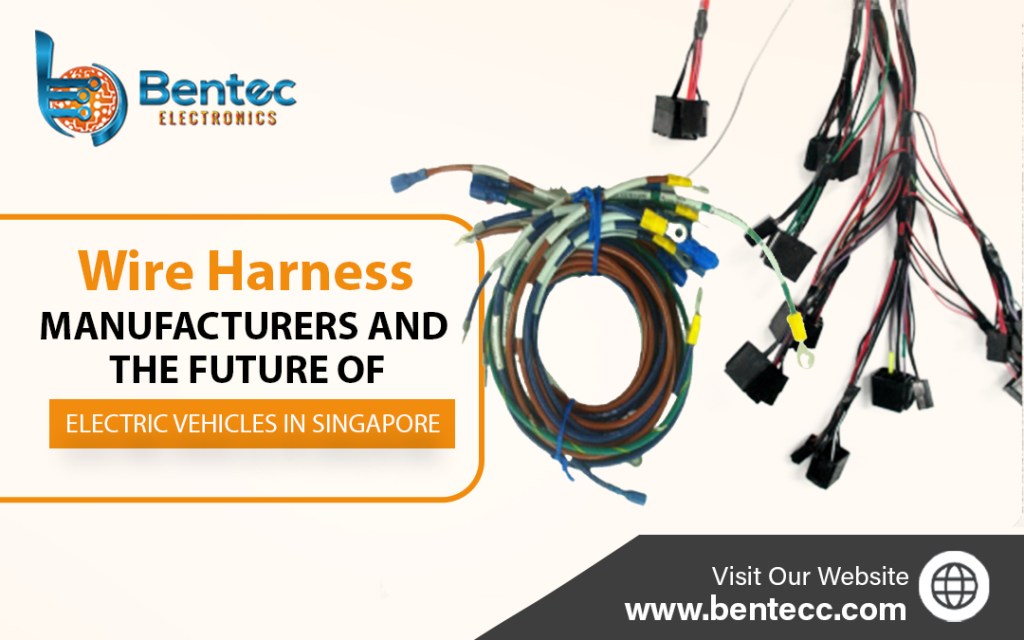
Wire Harness Manufacturers and the Future of Electric Vehicles in Singapore

The future of electric cars (EVs) is changing the nature of the automobile industry across the globe. As countries like Singapore move towards a cleaner future, there has never been a greater need for EVs. At the center of all this transformation is the contribution of wire harness manufacturers, who are tasked with producing the complex systems that charge and link the different parts of EVs.

In this blog, we will discuss the significance of wire harnesses in the electric vehicle industry and how businesses are future-proofing electric vehicles in Singapore.

The Crucial Role of Wire Harnesses in Electric Vehicles

Wire harnesses provide a channel through which electric devices like motors, sensors, batteries, and charging systems communicate effectively to facilitate the proper operation of the whole electric vehicle.

Wire harnesses have the duty of carrying out a number of important duties in EVs:

  • Power Supply: EVs need to have proper power distribution to different components of the vehicle, from the electric motor itself to the onboard charger. Wire harnesses provide power correctly through such systems.
  • Signal Conveyance: EVs today have lots of sensors, cameras, and control units that need to talk to one another in unison. Wire harnesses transfer the signals between the units.
  • Reliability and Safety: Due to the high voltage and risk of hazards from EVs, wire harnesses are made to be durable, fire-resistant, and safe so that they can withstand extreme conditions and remain in working condition for some time.

The Need for Wire Harness Manufacturers in Singapore

With Singapore moving forward in electric mobility aggressively, the need for high-quality wire harnesses is also on the rise. Singapore’s vision of curtailing carbon emissions and encouraging environmentally friendly technologies has been fueling an uprising in the sale of EVs.

The following are the primary drivers propelling the demand for the best wire harness manufacturer in Singapore:

Government Incentives

The Singaporean government has launched a number of incentives and policies for the development of electric vehicles in an effort to encourage the increase of electric vehicles, such as grants for EV adoption and EV charging infrastructure subsidies.

Technological Advancements

With the EV technology advancing at a fast rate, wire harness manufacturers are required to follow evolving design needs in order to enable wire harnesses with increased voltage support and improved power distribution systems.

The Wire Harness Manufacturer’s Role in the Future

With the Singapore EV industry still expanding, the suppliers of wire harnesses will also play an important role in further development of the potential of electric vehicles. Some of the ways through which they will influence the future of the industry are the following:

  • New EV Solutions: The suppliers of wire harnesses will be requested to develop novel solutions that will directly respond to the needs of EVs, including high-speed electric motors, as well as efficient energy storage solutions.
  • Sustainability: They care about the green materials and manufacturing processes that are environmentally friendly, as it is a global trend to produce cars more sustainably.
  • Installation of Smart Techs: In autonomous driving, wire harnesses should be prepared to deliver the communication systems that will precondition the use of AI-driven technology to make it work perfectly.

In Conclusion

The Electric vehicle in Singapore has a great future because the country can be considered a leader in terms of adopting green technology and innovation. Finally, wire harness manufacturers and other major suppliers, like a Harting distributor in Singapore, will lead the next round of electric vehicle development, as they will add to the sustainability and technological capability of the industry.

The Importance of Custom Batteries and Harting Technology in Business

In today’s competitive corporate world, power and communication must work in tandem. Harting technology enables custom battery Malaysia to deliver power and information precisely when and where they are needed. So, they work together to create modern enterprises that are more innovative, resilient, and enduring.

How Modern Harting Technology Affects Different Fields

Harting technology is a part of industrial connection because it makes sturdy connections. They are essential for automation lines and data centers, and they are usually bought from a trusted Harting distributor Singapore. This also enables the safe and uninterrupted transmission of power, data, and signals, even under the most challenging conditions.

  • Harting connections made today can handle high voltage and current ratings, even in small applications.
  • Their design allows you to combine different jobs, including power, signal, and data, into a single link.
  • They can withstand water, dust, vibrations, and temperature fluctuations. This makes them ideal for use in various industries and outdoor settings.
  • Quick assembly and easy-to-use features reduce the time and cost of construction and maintenance.
  • Modern connections enable Industry 4.0 infrastructures to send and receive critical data.

Uses of Harting Technology

Harting connectors and interface solutions play a significant role in high-performance applications that need tight, strong, and fast connections. These are things that a reputable Harting distributor in Singapore may provide you. You can use them in various ways to improve and extend the lifespan of things.

  • Send robots power and messages so they can do their jobs without too much trouble.
  • Trains, subways, and trams all require solid electrical connections. These parts must function properly even when the system is vibrating or operating at high temperatures.
  • Solar panels and wind turbines can be use to transfer electricity safely and stably.

Packaging and food processing machines make it simple to detach and reconnect for cleaning and maintenance. This way, the system can continue to function without needing to be shut down.

The Role of Custom Batteries in Business

Custom battery systems are becoming increasingly critical as the world becomes more automated, portable, and reliant on renewable energy. They are also the finest way to store and distribute energy for use. These batteries also help a lot of things work better and last longer by mixing various chemicals, shapes, and management systems:

  • Individually custom packs have unique design to fulfill specific requirements for power, current, and runtime.
  • Hosted heat controls and battery management systems (BMS) reduce hazards and extend battery life.
  • Made to fit in places that aren’t typical in medical gadgets, robotics, and drones.
  • New materials increase energy density while lowering mass.
  • Some firms use environmentally friendly chemicals when producing customized units for recycling.

When to Use Custom Batteries

The flexibility of Custom battery Malaysia is a strength. They have the ability to work in a variety of fields. These batteries serve a wide variety of applications, from places that need a lot of energy to tiny gadgets, with better accuracy and dependability.

  • Used in pocket monitors, drip pumps, and other devices that need a small amount of electricity all the time.
  • Ensure a solid backup is in place in case the power goes out in a remote area.
  • Cameras and motion detectors that operate off the grid require electricity that can last for an extended period.
  • Used drones and GPS-guided tools to do farming chores and keep an eye on things in real-time.

Harting technology and custom battery solutions are transforming how businesses operate. They are incredibly adaptable and can be easily connected to multiple power sources. They help firms operate more effectively, safely, and flexibly in a market that is constantly evolving.

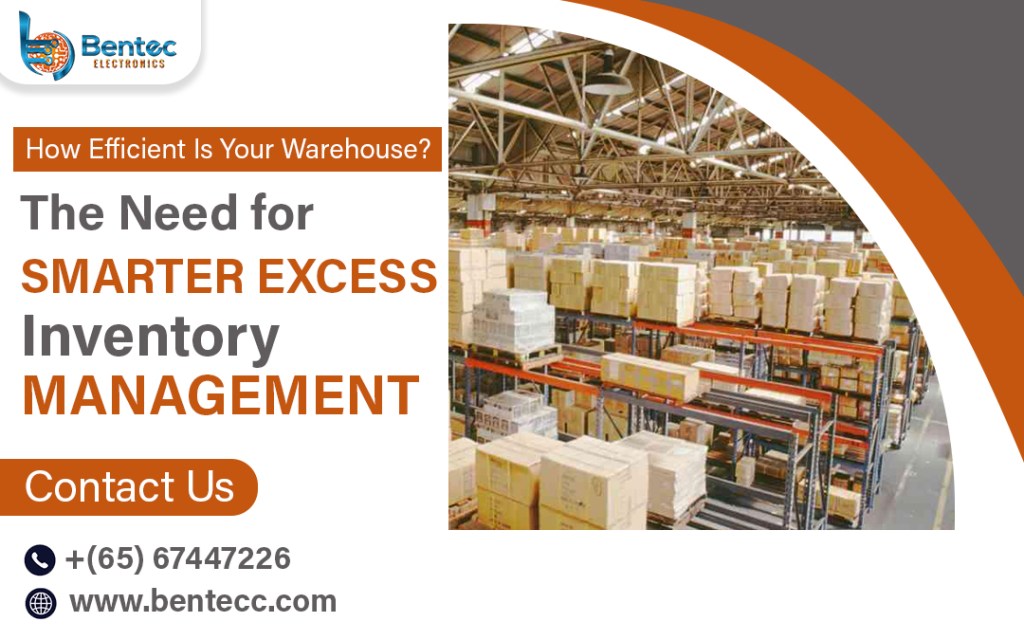
How Efficient Is Your Warehouse? The Need for Smarter Excess Inventory Management

In today’s fast-moving industrial environment, warehouse efficiency isn’t merely an efficiency measure—it’s a requirement for business survival. The escalating demand for smart industrial components, like those by a Harting distributor in Singapore, has put a greater burden on warehouses to work with precision.

Yet, one of the neglected challenges that upset this accuracy is excess inventory. Inefficient handling of surplus stock can lead to increased costs, wasted storage space, and, eventually, reduced operational performance.

Understanding the Hidden Costs of Excess Inventory

Overstock is more than unused inventory—it’s immobilized capital, added storage expenses, and higher obsolescence risk. When warehouses are full of unsold or sluggish merchandise, room to store fast-moving inventory decreases. In addition, stock mismanagement can produce inaccurate forecasts and procurement errors, exacerbating the issue in the long run.

Most common problems related to overstock:

  • Higher storage and maintenance expenses
  • Lower cash flow
  • Increased risk of product expiration or obsolescence
  • Wasteful use of warehouse capacity
  • Supply chain agility disruption

Specialized supplier-influenced warehouses, like a Harting distributor in Singapore, should be extra vigilant since component life cycles can be brief, and specs can evolve swiftly.

Why Smarter Inventory Management is Important

Successful excess inventory management is not merely about minimizing excess—it’s about developing a lean and responsive system that enables agility and precision. With the help of smarter strategies, companies can turn warehousing into a profit-generating unit instead of a cost center.

Smarter Excess Inventory Management Strategies:

1. Data-Driven Forecasting

Use forecasting systems that review past trends and forecast future demand with a high level of accuracy. Involving real-time sales and supply data in your inventory choices is the key to avoiding overstock.

2. Regular Inventory Audits

Schedule regular checks and stock assessments in order to detect slow-moving stock before it turns into dead stock. A cycle count system usually beats periodic annual counts in terms of maintaining accuracy.

3. Demand Segmentation

Classify inventory according to the variability of demand. This aids in fitting inventory strategy to various product classes and market behavior, maximizing order quantities.

4. Automated Replenishment Systems

Automation reduces errors caused by humans and assists in maintaining optimum levels of stock. Automated systems also issue notifications whenever there are mismatches or threshold crossing.

5. Liquidation and Redistribution

Anticipatively sell out old stock or shift it from one branch to another where there could be more demand. This not only opens up space but also minimizes the write-off burden.

Making the Transition: From Overstock to Optimization

Shifting to intelligent inventory practices does not mean an overhaul—it starts with incremental, regular improvements. Adopting just one of the above strategies can result in quantifiable gains. For example, companies involved in technical component supply chains—like those handling a Harting distributor in Singapore—can gain significantly from intelligent demand planning and rigorous inventory classification.

A contemporary warehouse needs to advance beyond being merely a passive repository. It needs to be an adaptive, responsive node in the supply chain. Effective excess inventory management is key to this progression.

In Summary

Excess inventory is a silent drain on warehouse productivity and profitability. By adopting data-driven, segmented, and automated strategies, businesses can achieve leaner operations and better serve their markets. Whether you’re handling consumer goods or partnering with a Harting distributor in Singapore, refining your approach to excess inventory management is critical for long-term success.