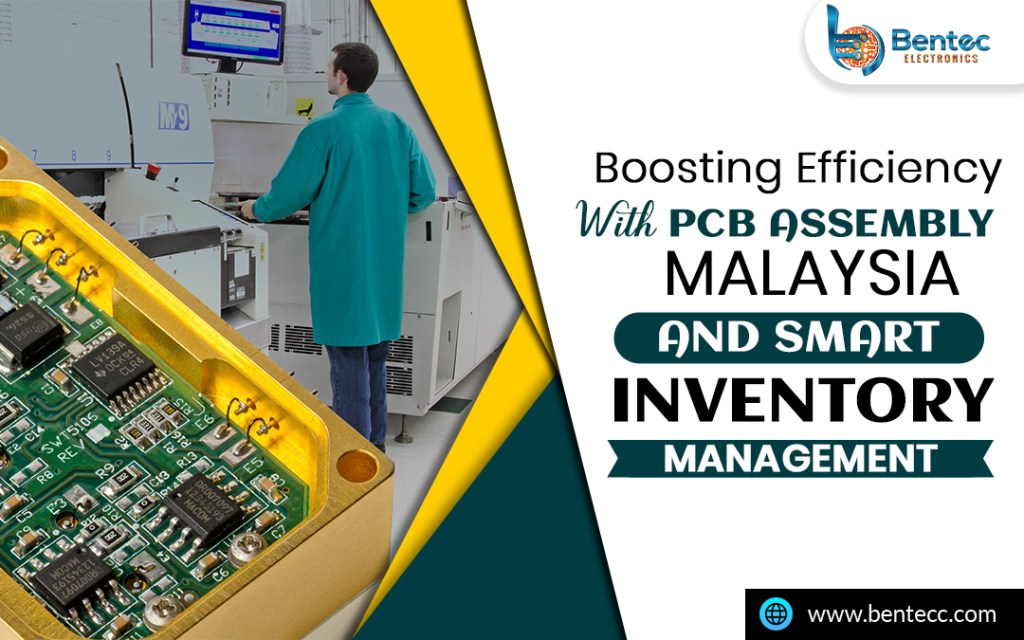
Boosting Efficiency with PCB Assembly Malaysia and Smart Inventory Management

When making electronics, time and precision are very important. Two important parts of this process are PCB Assembly Malaysia and excess inventory management. When these parts fit together smoothly, they not only ensure that production goes smoothly but also save money and use resources in the best way possible. This article discusses why these things are important and how they impact the manufacturing business.

The Malaysian PCB Assembly Process

Malaysia is a major PCB assembly center because of its talented labor, sophisticated technology, and low prices. PCB assembly involves precisely placing electronic pieces on a PCB to make circuits work.  It takes a lot of accuracy to place and solder parts together to ensure the quality and stability of the result. Businesses can find high-quality PCB assembly services in this country because it is in a good location and has a robust supply chain network.

The Purpose of Excess Inventory Management

Businesses need to keep track of their stock. The process of handling extra stock cleverly is called excess inventory management. When you work in the electronics business, having less inventory can be very bad. For example, it can lead to higher storage costs and the chance that items will become updated. By managing their extra goods better, businesses can waste less, free up warehouse room, and get more cash flow. Companies can avoid the problem of making too much by ensuring they have the right stock on hand through good inventory management.

Combining PCB construction and inventory control

PCB assembly Malaysia and excess inventory management must work together to complete the most work. Supply chain management and assembly must work well together to keep production on track and shorten wait times. This balance also makes it less likely that there will be too much or too little stock, which can slow down production and raise costs. When businesses have a system that works well with others, they can quickly meet the market’s wants.

Good PCB Assembly Inventory Management Benefits

There are many benefits to managing excess material well in PCB manufacturing. It lowers costs like taxes, insurance, and storage fees that come with running a business. Keeping their inventory low lowers the chance that they will hold on to old parts. This is very important in fields were technology changes quickly. Good inventory management also makes the supply chain more efficient by ensuring that things keep coming in so that work can continue.

Selecting Best Inventory Management and PCB Partner

If you want your business to run smoothly, it is essential to pick the right partner for PCB assembly Malaysia and excess inventory management. Clients should seek out service providers with a track record of success, cutting-edge tools, and a deep knowledge of inventory management. A reliable partner will offer excellent assembly services and also wisely handle their stock to avoid having too many extra items and make the most of production runs.

Conclusion

Finally, combining PCB assembly Malaysia with excess inventory management is a critical way to make production more efficient and save money. Combining these two things in a way that doesn’t look weird can give businesses an edge in the fast-paced tech market. It’s very important to find the right partner for these services if you want to ensure you get good products and run your business smoothly. This is why Malaysia is a hot spot for putting together PCBs and managing inventory. Bentec Electronics is your trusted partner in PCB assembly Malaysia and effective excess inventory management solutions. They will help you make your output more efficient.
How Important Is R&D For Malaysia’s Electronics Manufacturers?

Research and Development (R&D) is very important in the electronics manufacturing industry all over the world, and Malaysia also understands this. As a growing center for making electronic products, Malaysia depends a lot on R&D to maintain its competitiveness, innovation abilities, and ability to meet global market needs. But how much important is R&D for electronics manufacturers in Malaysia?

  • Boosts innovation: R&D is the lifeblood of innovation, keeping Malaysia’s electronics manufacturers ahead of the curve with cutting-edge products.
  • Competitive edge: Investing in R&D helps Malaysian companies stay competitive globally, ensuring they can rival industry giants.
  • Quality improvement: Through R&D, manufacturers can enhance product quality, leading to more reliable and durable electronics.
  • Cost efficiency: Innovative research can lead to more cost-effective production methods, reducing overall manufacturing costs.
  • Talent attraction: Strong R&D initiatives attract top talent in the field, fostering a skilled workforce that drives further innovation.
  • Driving innovation for better ways to make electronic products

In this field of PCB assembly Malaysia, new technology comes very fast, so being first and updated is very important. R&D is the main force behind this innovation. 

Malaysian electronics companies put a lot of money into R&D to create advanced technologies, new product designs, and better ways to make products. Companies such as Intel and Panasonic always invest a lot of resources into their R&D activities. 

  • Enhancing competitiveness through improved production processes

In electronics manufacturing, it is a very competitive industry. Research and development (R&D) are very important to stay strong and get better. By putting money into R&D, these makers can make their products stand out with special features, higher quality, and improved performance.

R&D lets companies make their production processes better, making them work faster and cost less. This can then lead to cheaper prices that help the company compete well in the market. 

  • Attracting foreign investment

Malaysia’s electronics manufacturing industry has been very attractive to foreign investors and research & development (R&D) is a key reason for this appeal. Big global companies are more inclined to invest in nations that focus strongly on R&D because it shows dedication to innovation and future expansion.

The strong R&D skills in Malaysia give trust to investors from other countries that they will find talented workers, new technologies, and helpful support. Because of this, more money comes into the country, jobs are made for people, and it makes the local economy better. Companies like Samsung and Sony have made R&D centers in Malaysia, showing they believe a lot in the country’s ability to innovate.

  • Tackling electronics industry sustainable challenges 

Research and development (R&D) assists the wire harness manufacturer in tackling these challenges directly. In a world where getting raw materials is sometimes not easy to predict, having good R&D makes it possible for companies to adjust fast and keep making products without big delays.

Research and Development (R&D) is very important for Malaysia’s electronics makers. As global electronics change more and more, R&D will become even more important. For Malaysia to stay a top player in electronics manufacturing, putting money into R&D is very important. 

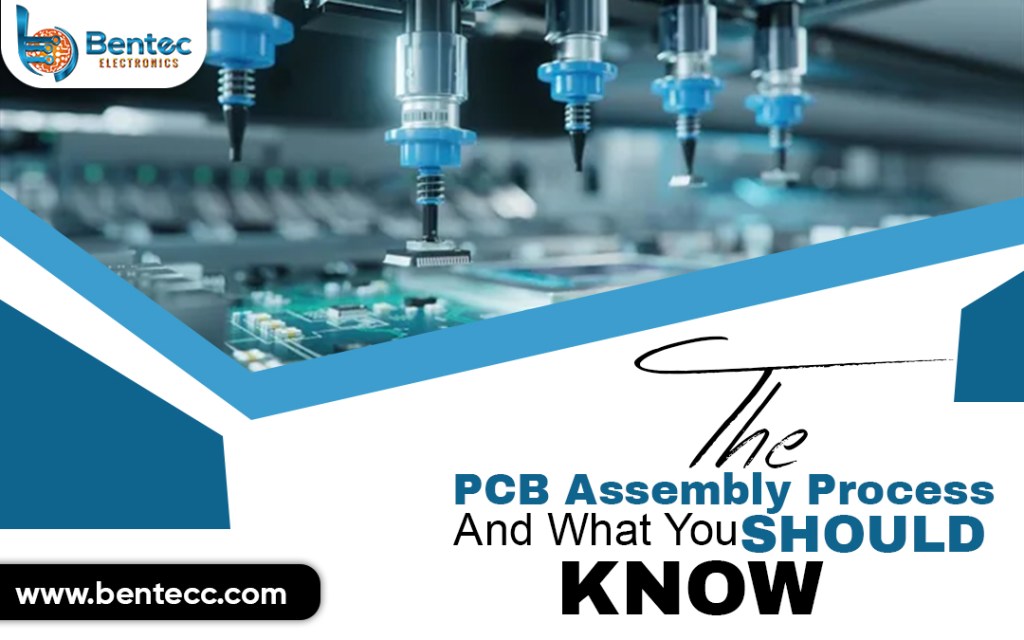
The PCB Assembly Process and What You Should Know

A printed circuit board (PCB) is the building block of every single electronic gadget in use today. Whether it’s a digital speedometer in your car, a smart speaker for your house, or a new intelligent thermostat, the PCB is at the core of electronic products. There’s a lot more work involved than merely assembling a bunch of resistors and components to make an electronic device that works.
Accuracy in the PCB assembly process is of the utmost importance. A potential breakdown, ineffectiveness, or even danger can arise from a single slip-up in this area. This article will go over the fundamentals of PCB Assembly Malaysia, including the most crucial procedures.

A General Over view of PCB Assembly

Solder Paste
Applying solder paste is the initial stage in the conventional PCB assembly process. Keep in mind that while this is not necessary for THT, it is for SMT.

Component Placement

Either human hands or machines can accomplish this task (pick-and-place systems) by placing the components on the board using the conventional method of PCB construction. Either human hands or machines can accomplish this task (pick-and-place systems). The meticulous hand-placing of components is a hallmark of THT assembly. Robotic systems place the parts on the board during the SMT process. Keep in mind that both the speed and accuracy of automated placement are comparable to those of human operators.

Reflow
The following step in the conventional PCB Assembly Malaysia is reflow, which entails melting and resolidifying the solder. After passing the board and its components through an oven to melt the solder and establish all the connections, the board is then cooled in a cooler.
You won’t need to reflow solder while using the THT technique. Step two instead involves checking the board and fixing the arrangement of the components. The placement process is done manually, requiring a combination of visual inspection and a design transport frame to ensure accuracy. To ensure accuracy, we use a combination of visual inspection and a design transport frame.
At this stage of the SMT process, we also perform reflow soldering. Before the board goes through a sequence of coolers that progressively lower the temperature, hardening the solder on the board and cementing the components in place, it goes through a furnace, which melts the solder paste and lets it flow as needed.

Inspection
After attaching the components to the board, the next stage in conventional PCB Assembly Malaysia is to visually verify the board and its connections. In the THT and SMT procedures, this phase has already been completed.

Through-Hole Part Insertion
After completing the reflow and inspection steps, operators must manually perform the through-hole insertion using the usual method. Although wave soldering is an option, hand soldering is more common.
Additionally, wave soldering happens during this stage of the THT process. The whole board must pass through cooling after immersion in liquid solder, allowing the solder to solidify.

Final Inspection and Cleaning
In the conventional method of PCB Assembly Malaysia, the last step is to clean the board, components, and solder points to remove any debris or surplus solder and to inspect the board, components, and solder points one last time.

Conclusion
If you’re looking for a Custom battery Singapore manufacturer that can meet your high-mix or low-volume needs at a price you can afford without sacrificing quality, look no further than Bentec Electronics. Full-turnkey design and build, electronics manufacturing, and maintenance services are all part of our service spectrum. We service a wide variety of industries, including electronics, semiconductors, transportation, industrial measurement, and more. A wide variety of systems, including biometrics, transportation, GPS, and semiconductor burn-in boards, are within our area of competence.